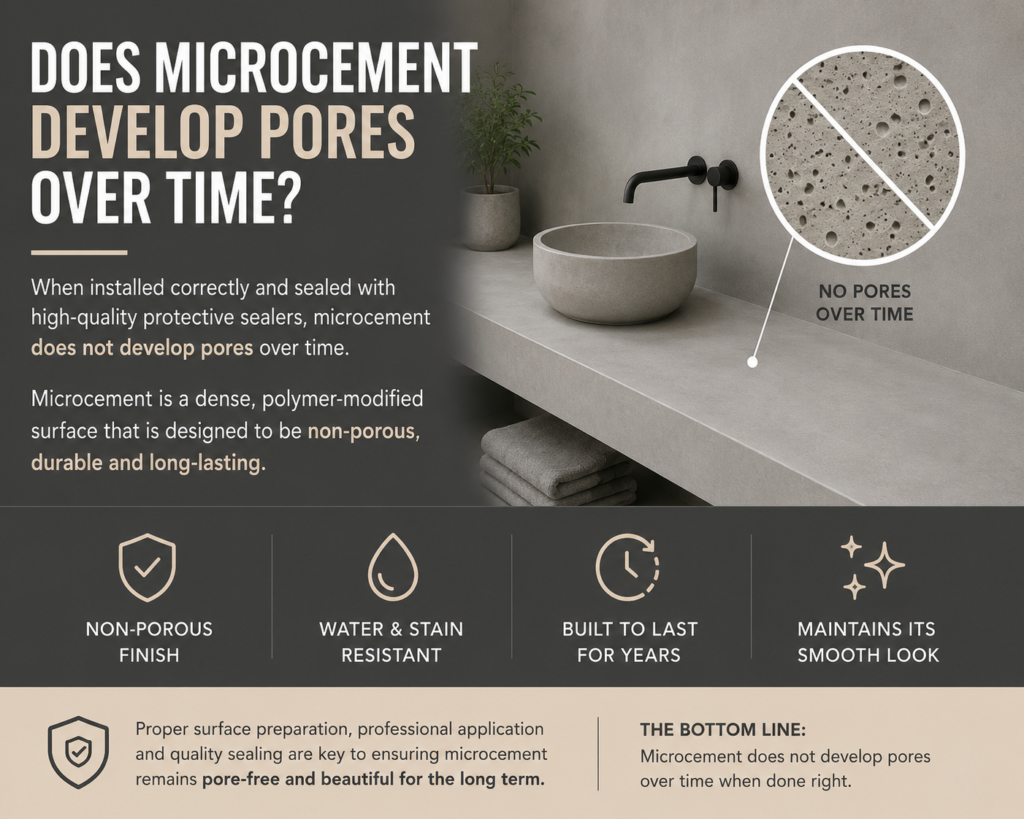
No, properly installed and sealed microcement does not normally develop pores over time. However, the condition of the sealer plays a major role in how the surface performs over the years.
Microcement has a naturally fine, cement-based structure, but during installation it is protected with high-quality sealers that create a waterproof, stain-resistant, and non-porous finish. As long as the sealer remains in good condition, water, dirt, and oils cannot penetrate the surface.
Over time, several factors can affect the finish:
- Sealer wear: In high-traffic areas, the protective sealer will gradually wear down. Consequently, the surface can become more absorbent until it is resealed.
- Poor installation: If the microcement is not applied correctly or the sealer is applied unevenly, small pinholes or porous areas may appear from the beginning.
- Lack of maintenance: Using harsh chemicals or abrasive cleaning products can damage the sealer, reducing its protective properties.
The good news is that this does not mean the microcement itself is failing. Instead, the protective sealer simply needs to be reapplied. With proper maintenance, a quality microcement system can remain smooth, waterproof, and virtually non-porous for many years.
How to Prevent Porosity
- Choose a high-quality microcement system.
- Ensure it is installed by experienced professionals.
- Use premium polyurethane sealers designed for wet and high-traffic areas.
- Clean with pH-neutral products.
- Reseal the surface when recommended, typically every 5–10 years in residential settings, depending on wear.
If you’re using a 100% waterproof microcement system with a premium polyurethane sealer, such as those supplied by Hawk & Trowel, the surface should remain non-porous and highly resistant to moisture, stains, and mould for many years when properly maintained.