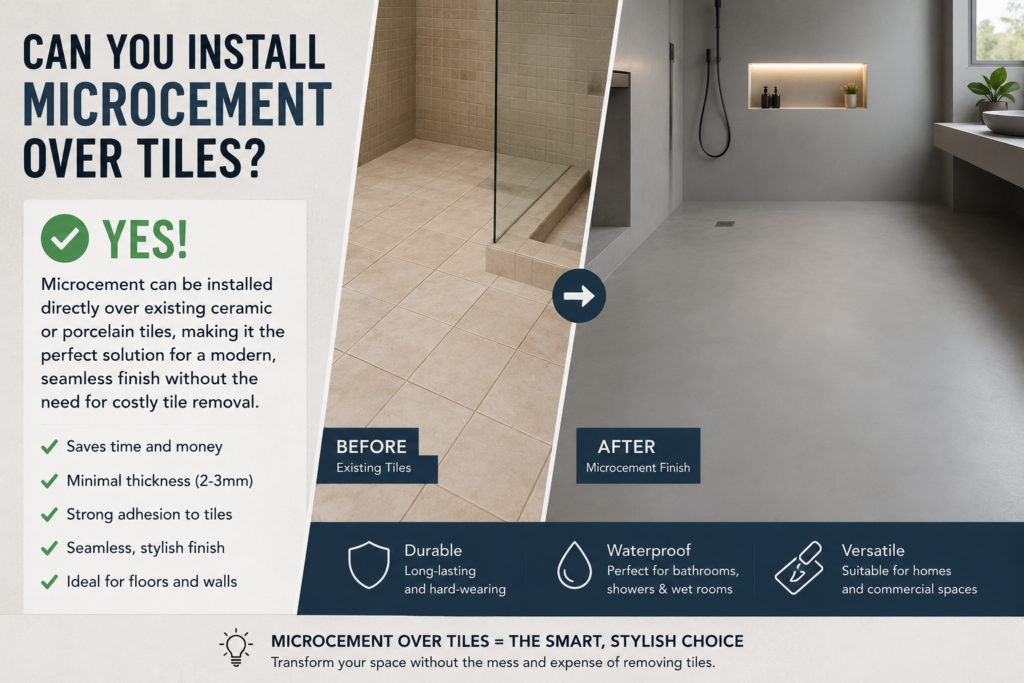
Yes, you can install microcement over tiles. In fact, existing tiled surfaces provide one of the most common foundations for microcement. As long as the tiles remain firmly bonded to the substrate and the surface receives the correct preparation, microcement creates a seamless, modern finish without removing the old tiles.
Why Install Microcement Over Tiles?
Many homeowners choose microcement because it transforms outdated tiles quickly and efficiently. Instead of removing tiles, creating dust, and paying for disposal, you can install microcement directly over the existing surface.
As a result, the renovation takes less time, produces less mess, and often costs less than a complete strip-out.
Furthermore, microcement adds only around 2–3mm of thickness. Therefore, doors, skirting boards, and fixtures usually require little or no adjustment.
Is Tile Preparation Important?
Absolutely. Proper preparation determines the long-term performance of the microcement.
First, the installer checks that every tile remains securely fixed. Loose or damaged tiles need replacement before work begins.
Next, the installer thoroughly cleans the surface to remove grease, dirt, soap residue, and contaminants.
After that, the grout joints receive a specialist filler to create a level surface. This step prevents the grout lines from telegraphing through the finished microcement.
Finally, the installer applies a high-performance primer before reinforcing the surface with a fiberglass mesh where required. These stages create a strong foundation for the microcement system.
Where Can You Apply Microcement Over Tiles?
Microcement works on many tiled surfaces throughout the home, including:
- Bathroom walls
- Shower enclosures
- Wet rooms
- Kitchen splashbacks
- Kitchen floors
- Living room floors
- Hallways
- Utility rooms
- Fireplace surrounds
- Commercial spaces
Because microcement creates a continuous surface without grout lines, it delivers a clean, contemporary appearance that many homeowners prefer.
Is Microcement Waterproof?
The microcement itself forms part of a complete system. However, the waterproof performance depends on the primers, base coats, and protective sealers used during installation.
For showers, bathrooms, and wet rooms, professional installers use waterproof systems together with high-quality sealers. Consequently, the finished surface resists water while remaining easy to clean and maintain.
What Are the Benefits of Installing Microcement Over Tiles?
Installing microcement over existing tiles offers several advantages:
- No need to remove old tiles
- Minimal disruption during renovation
- Less dust and waste
- Faster installation compared with a full replacement
- Seamless, grout-free finish
- Modern concrete-effect appearance
- Suitable for walls and floors
- Available in a wide range of colours and textures
- Easy to clean and maintain
- Durable when professionally installed
Are There Any Situations Where It Shouldn’t Be Installed?
Although microcement suits most tiled surfaces, some conditions require attention first.
For example, loose tiles, unstable substrates, excessive movement, or rising damp can affect the finished result. Therefore, a professional installer should always inspect the surface before installation begins.
Addressing these issues first ensures the microcement performs as intended for many years.
How Long Does Microcement Last Over Tiles?
A professionally installed microcement system can last for many years with proper care.
Regular cleaning, suitable maintenance products, and occasional resealing help preserve its appearance and durability. Additionally, avoiding harsh chemicals and abrasive cleaners protects the surface finish.
Conclusion
Installing microcement over tiles provides an excellent way to modernise kitchens, bathrooms, wet rooms, and living spaces without removing existing tiles. Because the installation adds very little thickness, homeowners enjoy a fast, clean renovation with minimal disruption.
Most importantly, success depends on careful surface preparation and professional installation. When experienced installers prepare the tiles correctly and apply a high-quality microcement system, the finished surface delivers a durable, seamless finish that looks stunning for years.