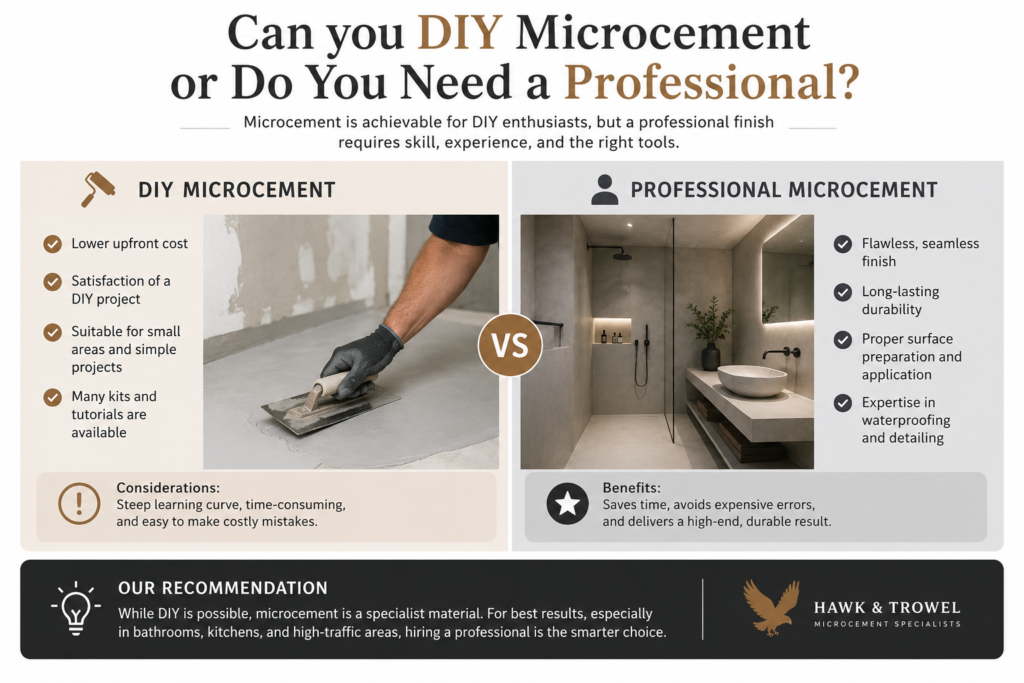
Can You DIY Microcement or Do You Need a Professional? Microcement has become one of the most popular finishes for modern homes because it creates a seamless, durable surface on floors, walls, bathrooms, kitchens, and furniture. However, many homeowners wonder whether they can install it themselves or whether hiring a professional is the better choice.
The answer depends on your experience, the size of the project, and the finish you expect.
Can You Install Microcement Yourself?
Yes, you can install microcement yourself if you have good DIY skills and follow the correct installation system. Many manufacturers sell complete DIY kits with primers, base coats, finishing coats, sealers, and detailed instructions.
However, microcement is not like painting a wall. Every stage, from substrate preparation to sealing, affects the final appearance and long-term durability. Therefore, small mistakes can become very noticeable once the surface has cured.
The Challenges of DIY Microcement
Although microcement is only around 2–3mm thick, applying it correctly requires patience and attention to detail.
Common challenges include:
- Preparing the substrate correctly.
- Applying consistent, even coats.
- Sanding between layers without damaging the finish.
- Mixing materials accurately.
- Applying sealers evenly to avoid patchy areas.
- Working within the product’s recommended drying times.
Because the finish is decorative, uneven trowel marks, ridges, or colour variations are difficult to hide.
Why Many People Choose a Professional Installer
Professional installers have experience applying microcement across a wide range of surfaces and understand how different substrates behave. As a result, they can achieve a smooth, consistent finish while avoiding many of the issues that affect first-time installers.
A professional installation also offers several advantages:
- A high-quality decorative finish.
- Correct waterproofing in showers and wet rooms.
- Better durability and wear resistance.
- Faster installation.
- Reduced risk of cracking or delamination.
- Access to commercial-grade materials and sealers.
For bathrooms, wet rooms, and large open-plan floors, professional installation is often the safest investment.
When DIY May Be Suitable
DIY microcement can work well for smaller, less demanding projects, such as:
- Feature walls.
- Fireplace surrounds.
- Shelving.
- Furniture.
- Small utility rooms.
These projects allow you to learn the application process before tackling larger spaces.
Which Option Offers Better Value?
Although DIY installation may reduce labour costs, mistakes can become expensive to repair. Removing failed microcement and starting again often costs more than hiring an experienced installer from the beginning.
If you’re looking for a flawless finish in a kitchen, bathroom, shower, or throughout your home, professional installation usually provides the best long-term value.
Final Thoughts
You can install microcement yourself, but achieving a professional-quality finish takes practice, careful preparation, and the right products. For small decorative projects, DIY can be a rewarding option. However, for waterproof areas, high-traffic floors, or premium finishes, hiring an experienced installer is generally the better choice.
Whether you choose DIY or professional installation, using high-quality microcement systems and premium sealers will help ensure your finished surface looks beautiful and performs well for many years.