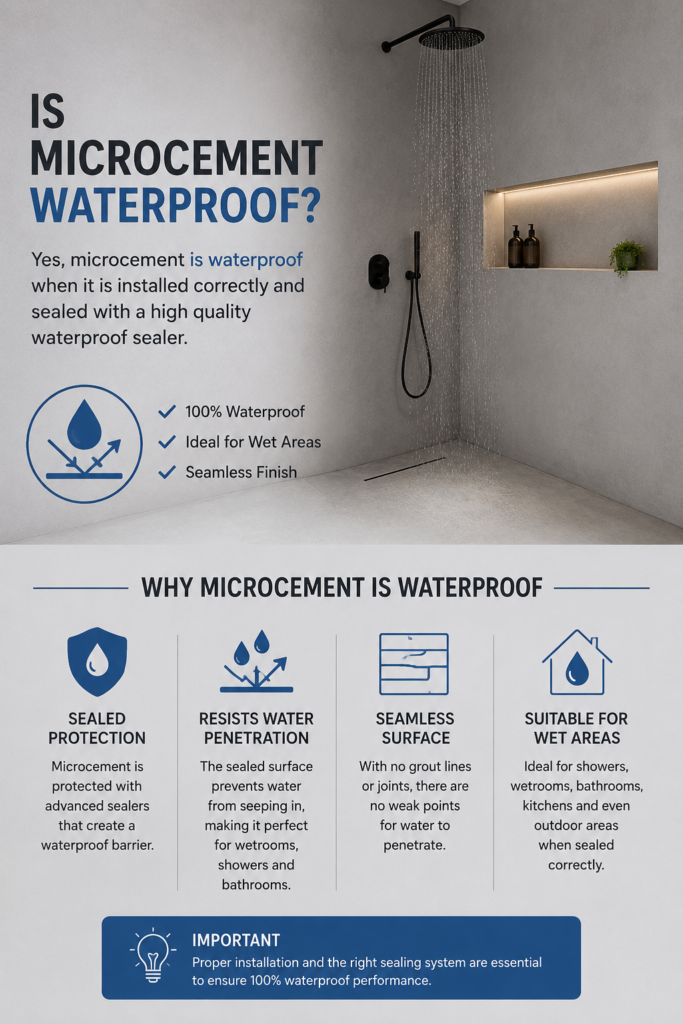
Yes, microcement can be waterproof, but the answer depends on the type of microcement and how it is installed.
Traditional microcement is not completely waterproof on its own. Although the cement-based coating is highly durable, it remains slightly porous until it is protected with a suitable sealer. Once a high-quality sealer is applied, the finished surface becomes water-resistant and suitable for bathrooms, kitchens, and other areas exposed to moisture.
However, Microcement Supplies UK now offer 100% waterproof microcement systems. These advanced products are designed to repel water throughout the coating, not just at the surface. When combined with the correct primers and sealers, they provide exceptional protection for wet rooms, showers, and bathrooms.
Where Can Waterproof Microcement Be Used?
A properly installed system is suitable for:
- Showers
- Wet rooms
- Bathroom walls and floors
- Kitchen splashbacks
- Utility rooms
- Commercial washrooms
- Spa and wellness facilities
Why Installation Matters
Even the best waterproof system will only perform as intended if it is installed correctly. The substrate must be stable, corners and joints should be reinforced where necessary, and the manufacturer’s recommended primers and sealers must be used. Poor preparation or incorrect application is the most common cause of failures.
Does Waterproof Microcement Still Need a Sealer?
Yes. Even if the microcement itself is waterproof, a high-performance sealer is still recommended. The sealer protects the finish from stains, chemicals, scratches, and everyday wear while making the surface easier to clean and maintain.
The Bottom Line
If you choose a 100% waterproof system and have it installed professionally, it is an excellent solution for bathrooms, wet rooms, and showers. It provides a seamless, modern finish that is both durable and resistant to water, making it a practical alternative to traditional tiles.