How Long Does Microcement Take to Install? Microcement installation is much faster than many traditional flooring and wall finishes. However, the exact timeline depends on the size of the project, the condition of the existing surface, and the number of areas being coated.
Typical Installation Times
As a general guide:
- Bathroom walls and floors: 3–5 days
- Wet rooms and showers: 4–6 days
- Kitchen floors: 3–5 days
- Living areas: 4–7 days
- Commercial spaces: 5–10 days, depending on size
Each layer of microcement must dry before the next one is applied. Therefore, rushing the process can affect the strength and appearance of the finished surface.
What Is the Installation Process?
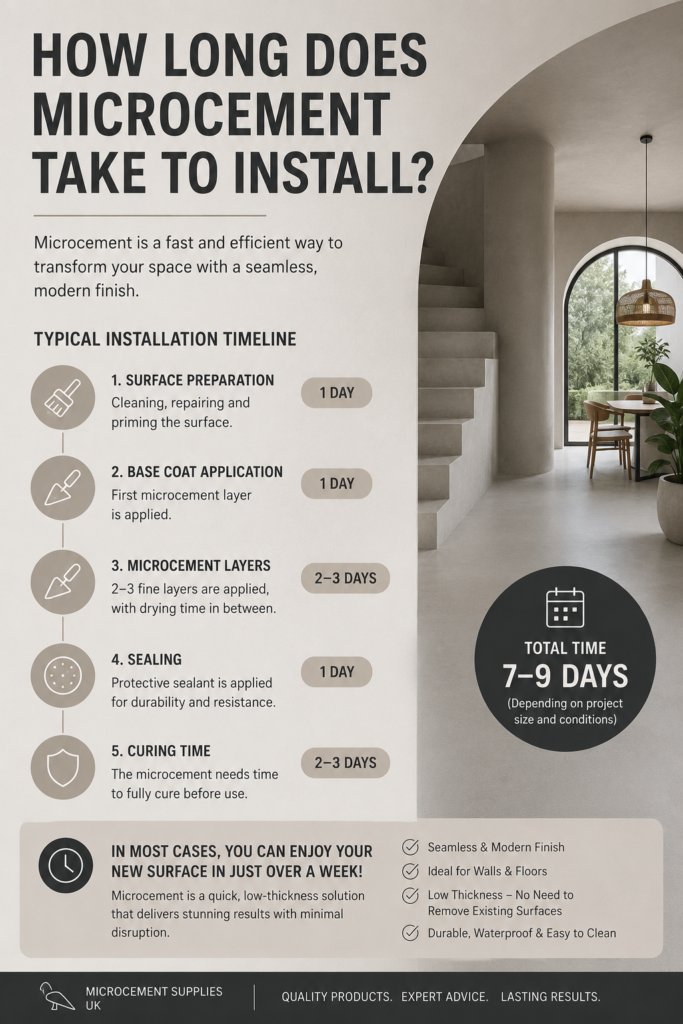
Although every project is different, the installation usually follows these steps:
- Surface preparation – The existing substrate is cleaned, repaired if necessary, and primed.
- Base coats – Reinforced base coats are applied to create a strong, even surface.
- Fine finishing coats – Decorative coats provide the chosen colour and texture.
- Sealing – High-performance sealers protect the microcement from water, stains, and daily wear.
- Curing – The surface continues to harden after installation for maximum durability.
When Can You Walk on Microcement?
Light foot traffic is usually possible 24 hours after the final sealer has been applied. However, it is best to avoid placing heavy furniture or appliances on the surface for 3–7 days, depending on the sealer used.
For showers and wet rooms, most installers recommend waiting 5–7 days before exposing the surface to regular water use. This allows the sealer to cure fully and achieve its maximum waterproof performance.
Factors That Can Affect Installation Time
Several factors can influence how long a project takes, including:
- The size of the installation area.
- The condition of the existing substrate.
- Whether repairs or levelling are required.
- Temperature and humidity during installation.
- The complexity of the design, including multiple colours or bespoke finishes.
Is Microcement Faster Than Traditional Renovation?
Yes. One of the biggest advantages of microcement is that it can usually be applied directly over existing tiles, concrete, plasterboard, screed, and many other stable surfaces. As a result, there is often no need for demolition or removing old finishes, which can significantly reduce the overall renovation time.
Final Thoughts
Most residential microcement projects are completed within 3 to 7 days, making it one of the quickest ways to achieve a seamless, modern finish. Because the material is applied in thin layers, there is minimal disruption compared with replacing tiles or installing new concrete. When installed correctly and allowed to cure properly, microcement provides a durable, waterproof, and long-lasting surface for both homes and commercial spaces.
Leave a Reply